New Jersey’s tree-lined streets and mature front yards are part of what makes so many of our neighborhoods beautiful, and part of what makes root intrusion one of the most common sewer line problems we see. Willows, silver maples, oaks, and poplars are especially aggressive, and in older towns with clay or cast-iron pipe joints, it doesn’t take much of a gap for roots to find their way in.
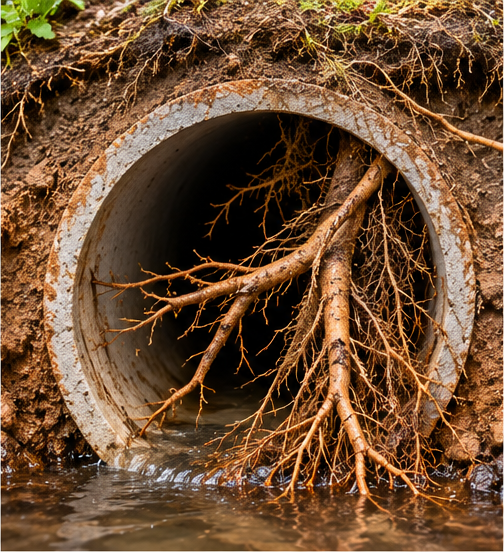
Sewer pipes carry a steady supply of water, nutrients, and warmth, everything a tree root is programmed to seek out. Even a hairline crack, a loose joint, or a slightly separated pipe connection releases enough moisture and oxygen to draw roots in like a beacon. Once a root finds an opening, it thickens over time, widening the crack and eventually filling the pipe.
Recurring clogs in the same drain, gurgling toilets, slow-draining fixtures throughout the house, and sewage backups after heavy rain are all classic symptoms. If your home is on a street with large, established trees and pipe installed before the 1980s, root intrusion should be high on your suspect list, and worth confirming with our warning signs of sewer line repair checklist.
We start with a high-definition camera inspection, feeding a waterproof camera through a cleanout to see exactly where roots have entered the line, how much of the pipe is affected, and what condition the surrounding pipe is in. This tells us whether you need a simple cleaning or a structural repair.
Hydro jetting with root-cutting attachments: High-pressure water combined with specialized cutting nozzles can shred roots and flush debris out of the line, restoring flow without digging. This is often the right call when the pipe itself is still structurally sound.
Trenchless pipe lining or repair: For pipes with recurring root problems or minor structural damage, a trenchless liner can seal off the cracks and joints roots have been using as an entry point, without excavating your whole yard.
Excavation and replacement: When a pipe has been significantly crushed, offset, or overtaken by roots along a long stretch, full excavation and replacement is the most durable long-term fix.
Routine camera inspections every couple of years catch new intrusion before it becomes a backup. For yards with mature trees near the sewer line, periodic hydro jetting maintenance and, in some cases, professional root barriers can keep new growth from reaching the pipe in the first place.
Ready to get it fixed? Call TruFlow at (908) 530-9516 or schedule your appointment online. Our licensed NJ team (NJHIC #13VH12979200) brings the camera, the jetter, and the answers.
Back to Blog

 hello@truflownj.com
 (908) 530-9516