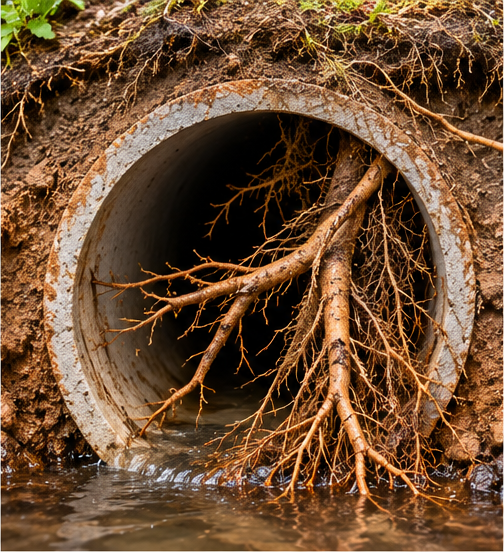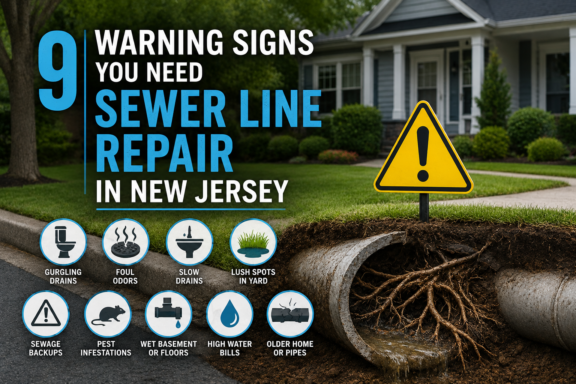
Your sewer line does its job underground and out of sight, which is exactly why most New Jersey homeowners don’t think about it until something goes wrong. Between older clay and cast-iron pipe common in towns across Union, Middlesex, and Somerset counties, freeze-thaw cycles every winter, and mature trees with aggressive root systems, NJ properties see more than their share of sewer line repair needs. The good news: a failing sewer line almost always sends warning signals before it causes a full backup or a collapsed pipe. Here are nine signs it’s time to call a professional.
One slow drain usually means a local clog. Several slow drains at once, in different parts of the house, points to a blockage further down the line, closer to the main sewer connection. If your kitchen sink, tub, and basement floor drain all seem sluggish in the same week, that’s your main line talking.
A properly sealed sewer system should not smell. Persistent rotten-egg or sewage odor near a cleanout, in the basement, or in a particular patch of lawn usually means a crack, break, or blocked vent is letting gas escape.
Sewage acts like fertilizer. A strip of grass that’s suddenly greener, lusher, or spongier than the rest of your yard, especially if it follows the path from your house to the street, often sits directly over a leaking sewer line.
Gurgling or bubbling sounds when you flush a toilet or run the washing machine mean air is trapped in the line, usually because a blockage downstream is disrupting normal flow and venting.
A collapsed or badly cracked pipe can wash away the soil that supports it, leaving a soft spot, dip, or small sinkhole above the pipe’s path. This is a sign of significant structural damage, not routine buildup.
Slow leaks from a cracked sewer or drain line under a basement slab can raise humidity and feed mold growth long before you ever see standing water.
A leaking line near the foundation can erode supporting soil, leading to settling, hairline cracks, or doors and windows that suddenly stick.
Rodents and insects are drawn to the moisture and organic material from a leaking line. A sudden uptick in activity near your cleanout or a specific yard area is worth investigating.
A cracked line can let groundwater infiltrate the sewer system, which many NJ municipalities meter and bill for, or force fixtures to run longer to drain properly. An unexplained increase is a good reason to check the line.
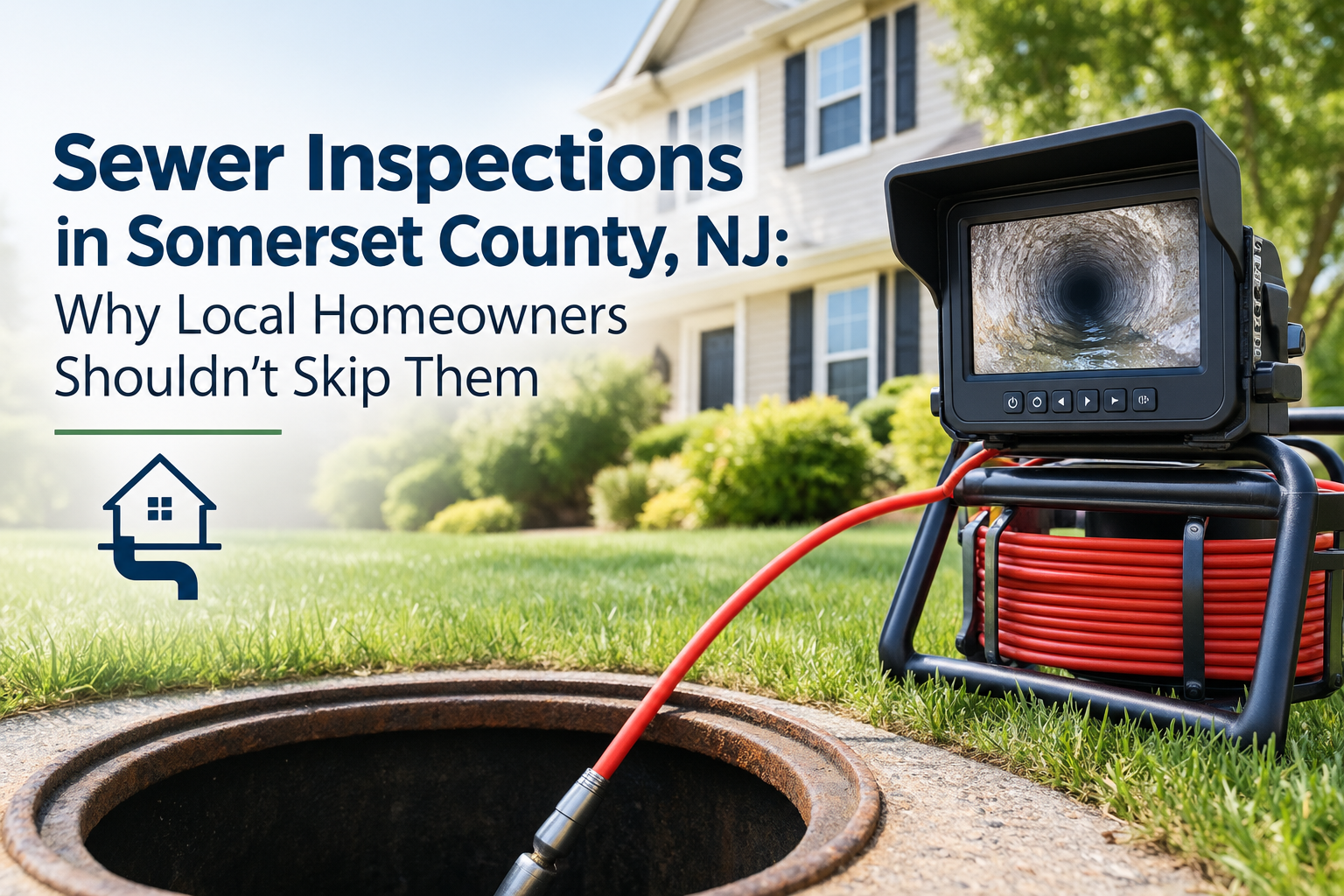
Don’t guess, and don’t start digging. The most reliable next step is a high-definition camera inspection, which lets us see the exact condition, material, and location of the problem before recommending a fix, whether that’s hydro jetting to clear buildup, a targeted trenchless repair, or a full sewer line replacement.
Ready to get it fixed? Call TruFlow at (908) 530-9516 or schedule your appointment online. Our licensed NJ team (NJHIC #13VH12979200) brings the camera, the jetter, and the answers.
Back to Blog

 hello@truflownj.com
 (908) 530-9516