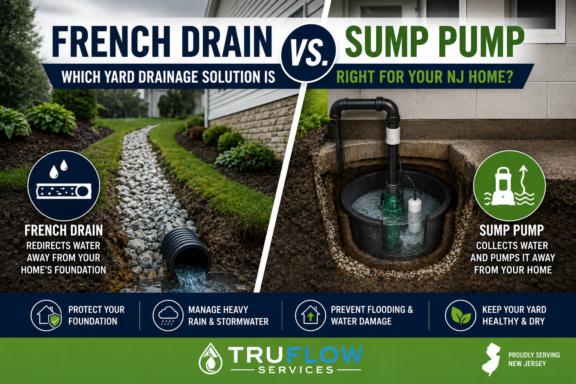
New Jersey’s mix of clay-heavy soil, flat lots, and increasingly heavy storm systems means standing water and soggy yards are one of the most common calls we get for yard drainage. Two solutions come up again and again: French drains and sump pumps. They solve different problems, and knowing which one, or both, your property needs can save you money and prevent the wrong fix.
A French drain is a gravel-filled trench with a perforated pipe running through it, installed to intercept water at or near the surface and carry it, by gravity, to a safer discharge point away from your home. It’s a passive system, no power, no moving parts, that works continuously as long as it has a slope to drain toward.
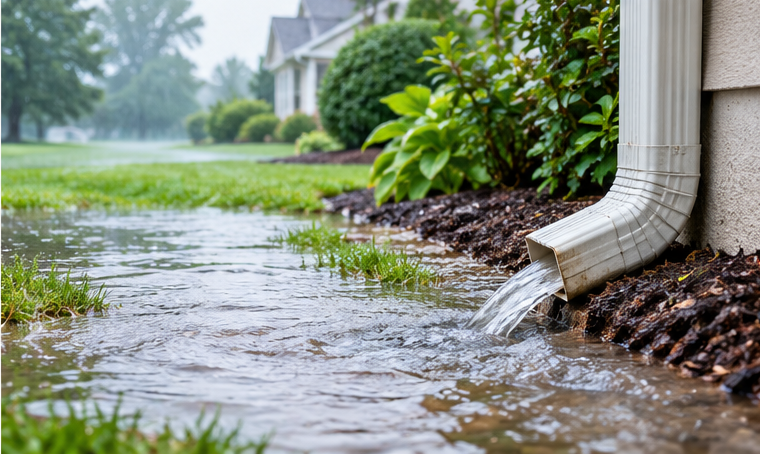
Best for: surface water, soggy lawns, water running toward the foundation from a slope, and managing runoff from gutters and downspouts.
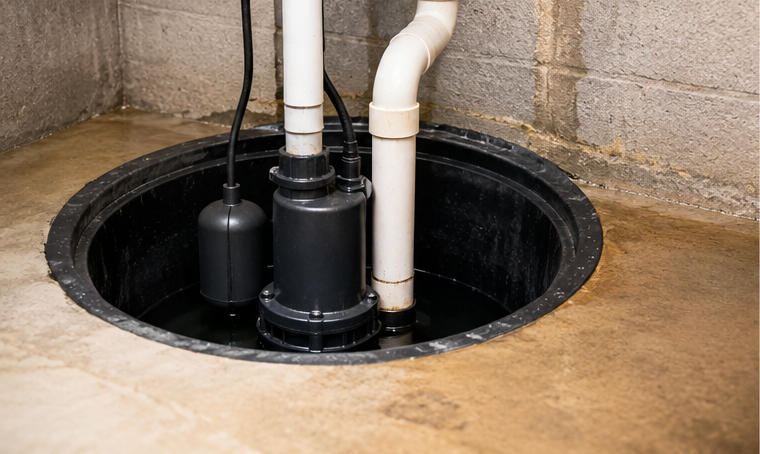
A sump pump sits in a basin, typically in a basement or crawlspace, and actively pumps water that collects there up and out of the house. Unlike a French drain, it relies on electricity and a mechanical pump to move water against gravity.
Best for: homes with a high water table, basements prone to flooding, or crawl spaces where water collects below the level it could otherwise drain away naturally.
Many NJ homes do. A French drain handles the yard so water never makes it to the foundation in the first place, while a sump pump serves as the backup line of defense for any water that does find its way into the basement. If you’re dealing with both a soggy lawn and a damp basement, our guide to mastering yard drainage is a good next read, and both systems are worth discussing with our team.
We look at your yard’s grading, soil composition, where water pools after a storm, downspout placement, and whether your basement shows signs of moisture. From there we can recommend catch basin work, French drain installation, sump pump installation, or a combination, matched to your property instead of a one-size-fits-all fix.
Ready to get it fixed? Call TruFlow at (908) 530-9516 or schedule your appointment online. Our licensed NJ team (NJHIC #13VH12979200) brings the camera, the jetter, and the answers.
Back to Blog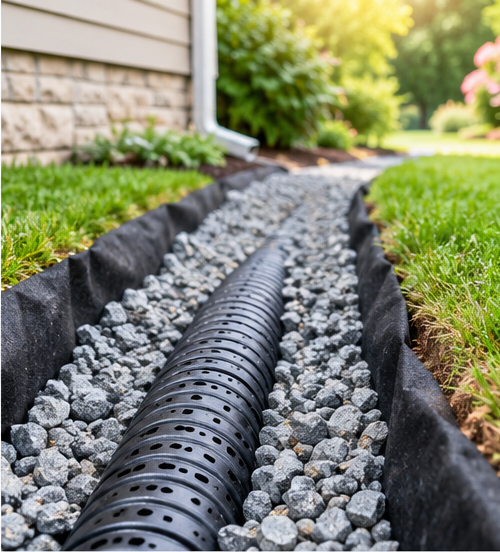

 hello@truflownj.com
 (908) 530-9516