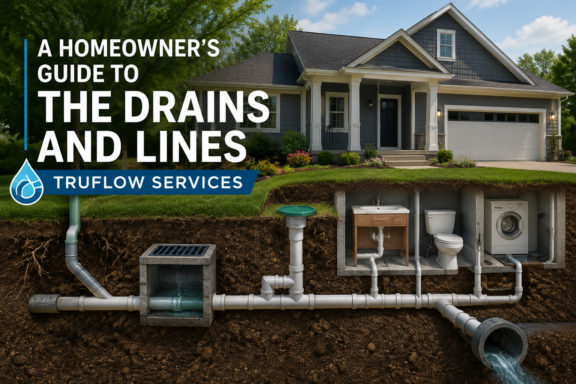
Every home relies on a hidden network of pipes and drains to carry water in and waste out. Most of us never think about this system until something backs up, slows down, or starts smelling funny. Understanding the different lines running through your home can help you catch problems early and know when it’s time to call a professional. Here’s a rundown of the drains and lines TruFlow services, and why each one matters.
Kitchen sink drains take a beating. Grease, food particles, coffee grounds, and soap scum all funnel through this line daily, and over time they build up into stubborn clogs. A slow-draining kitchen sink is often the first sign that grease has started coating the inside of the pipe. Left unaddressed, that buildup narrows the passage until water barely moves at all.
Bathroom sink drains face a different enemy: hair, toothpaste residue, soap, and skincare products. These materials combine to form clogs that sit right at the drain stopper or a little further down the trap. Bathroom sink lines are usually narrower than kitchen lines, so they clog more easily and often need more frequent attention.
Shower and tub drains deal with heavy hair buildup combined with soap and shampoo residue, which creates a sludge that clings to pipe walls. These lines also tend to have shallower slopes, making them prone to slow drainage over time. A shower that drains slower each week is usually a sign the line needs clearing before it stops completely.
Toilet lines carry waste and paper products to the main sewer system, and they’re built to handle more volume than sink drains. That said, they’re not immune to clogs, especially when non-flushable items make their way in. Because toilet lines connect directly to larger waste lines, a blockage here can sometimes signal a bigger issue further down the system.
Floor drains are the quiet workhorses of basements, garages, and utility areas, designed to catch overflow and prevent water damage. Because they’re used infrequently, floor drains are especially prone to debris buildup and dried-out traps, which can let sewer gas odors seep into the home. Regular attention keeps these drains ready to do their job when you actually need them.
Laundry room drains handle lint, detergent residue, and large volumes of water in short bursts every time a washing machine cycles. Lint buildup is the biggest culprit behind clogs here, gradually restricting flow until water backs up during the wash or rinse cycle. These lines also tend to be more prone to pressure-related issues given how much water moves through them at once.
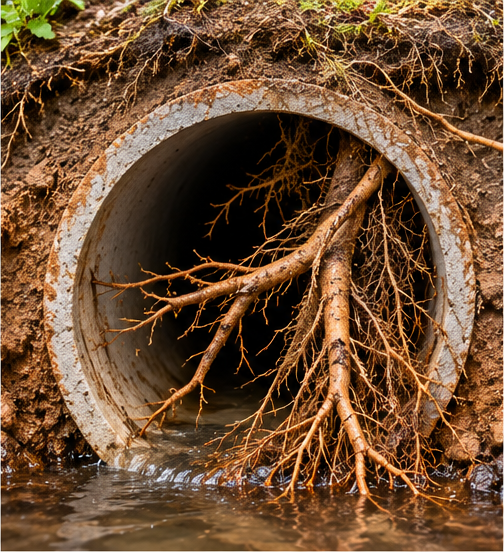
The main sewer line is the backbone of your home’s entire drainage system, carrying wastewater from every fixture out to the municipal sewer or septic tank. Because everything eventually funnels through this single line, a clog or break here affects the whole house at once. Tree root intrusion, pipe age, and ground shifting are common causes of main line problems, and they’re usually the most serious drainage issues a home can face.
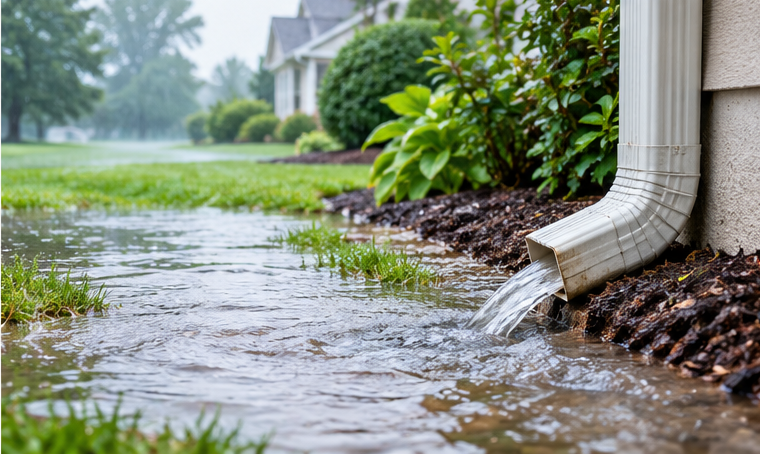
Exterior drainage lines manage water runoff around your property, directing rain and groundwater away from your foundation. When these lines clog or collapse, water can pool near the house and lead to foundation damage, basement flooding, or landscape erosion. Because they’re buried and out of sight, exterior lines often go unchecked until a problem becomes visible above ground.
From the kitchen sink to the sewer line running under your yard, every pipe in your home’s drainage system plays a specific role. Small issues in one line rarely stay isolated. A slow bathroom drain today can turn into a main line backup down the road if it’s ignored long enough. Paying attention to how your drains behave, and addressing slow drainage or odors early, is the best way to avoid bigger repairs later.
If you’re noticing slow drains, recurring clogs, or unpleasant odors anywhere in your home, TruFlow is ready to help you find the source and get things flowing properly again.
Back to Blog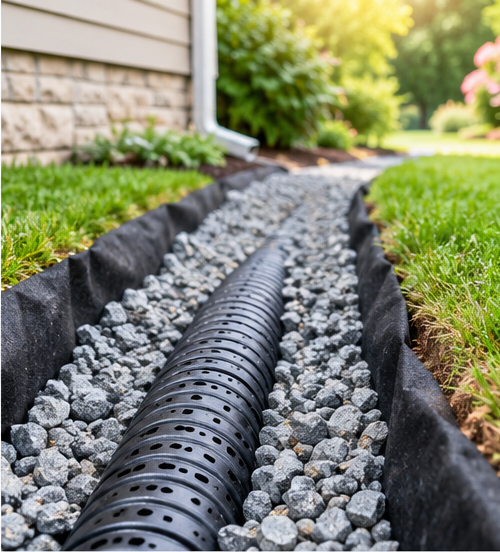

 hello@truflownj.com
 (908) 530-9516