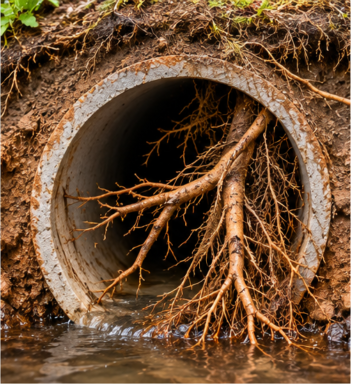
Bridgewater and Bernards Township are two of Somerset County’s leafiest communities, and that’s no accident. From the mature oaks along North Bridge Street to the wooded lots around Basking Ridge and Liberty Corner, decades-old trees are part of what makes these neighborhoods so desirable. Unfortunately, those same trees are one of the leading causes of sewer line failure we see in this part of the county.
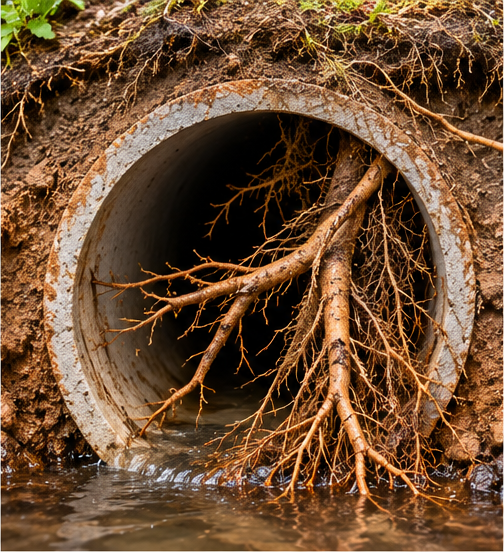
Sewer pipes carry a steady, reliable supply of water, oxygen, and nutrients, everything a tree’s root system is naturally drawn to seek out. Roots don’t need a large opening to get in. A hairline crack, a slightly separated joint, or a small amount of pipe corrosion is enough for a root to find its way inside. Once established, that root grows, branches, and eventually forms a dense mat that traps toilet paper, grease, and debris, causing backups even when the rest of the line is intact.
In Bridgewater’s older sections near the Raritan River and in Bernards Township’s wooded Basking Ridge neighborhoods, we regularly find root intrusion in pipes that are otherwise 40, 50, or even 70 years old. It’s rarely a question of if roots will find a vulnerable pipe in these areas, it’s a question of when.
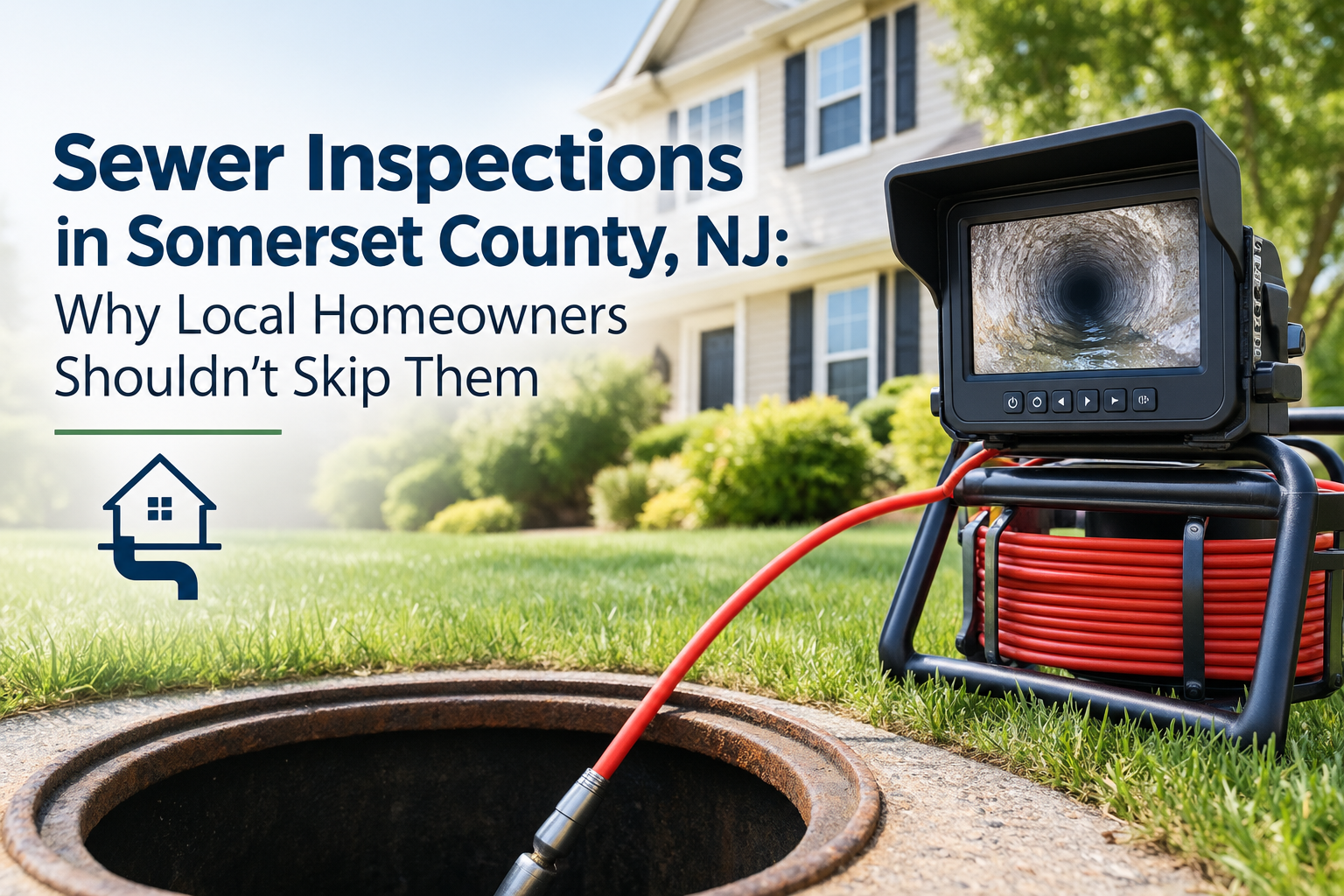
If any of this sounds familiar, the most reliable way to confirm root intrusion — without digging up your yard to look — is a sewer line camera inspection. Our team feeds a waterproof camera through an access point and can typically pinpoint the exact location and severity of root intrusion within 45 to 90 minutes.
Once we know where the roots are, the next step depends on how established they are.
For moderate root intrusion, hydro jetting is often the most effective solution. Using water pressure between 1,500 and 4,000+ PSI, hydro jetting doesn’t just punch a hole through the roots the way a mechanical auger does — it scours the entire interior wall of the pipe clean, cutting away root growth and flushing years of buildup out of the line. This tends to buy homeowners significantly more time before roots return compared to a standard snaking.
For more severe cases — where roots have cracked or displaced sections of pipe — jetting alone isn’t enough. At that point we typically recommend sewer line repair, and depending on the extent of the damage, our team will walk you through whether a trenchless approach or targeted excavation makes more sense for your property. Trenchless methods are often preferred on mature Bridgewater and Bernards Township lots specifically because they avoid disturbing established landscaping and large tree root systems above ground.
Once a line has been cleared, we recommend homeowners in root-prone areas schedule a follow-up camera inspection annually, particularly if you have large trees within 20-30 feet of your sewer lateral. Catching new root growth early, before it re-establishes a dense mat, is far less disruptive and less expensive than waiting for the next backup.
We’ve written more about seasonal maintenance in our post on winterizing your sewer and drainage system, which is especially relevant heading into the colder months when frozen ground can make emergency repairs more difficult.
Bridgewater and Bernards Township’s tree canopy is worth protecting — and so is what’s running underneath it. If you’re dealing with recurring clogs or suspect root intrusion, visit our FAQ page to learn what to expect, or go ahead and schedule an appointment with TruFlow.
TruFlow proudly serves Bridgewater, Bernards Township, Basking Ridge, Liberty Corner, and the surrounding Somerset County area. Call (908) 530-9516 or visit truflownj.com to schedule a camera inspection.
Back to Blog

 hello@truflownj.com
 (908) 530-9516