If you own a home in Somerset County, your sewer line is probably older, closer to tree roots, or nearer a flood-prone river than you think. From the pre-war streets of Somerville, Raritan, Manville, and Bound Brook to the leafy neighborhoods of Warren, Watchung, and the Somerset Hills, this county’s mix of aging infrastructure, mature trees, and river geography makes sewer line inspections one of the smartest maintenance steps a homeowner can take.
Here’s why Somerset County presents a unique case for regular sewer inspections, and what local homeowners should watch for.
Somerset County’s housing stock spans more than a century of construction. In the river boroughs, Somerville, Raritan, Manville, and Bound Brook, many homes still rely on original clay or early cast iron sewer laterals, some paired with galvanized supply lines that were never intended to last this long. In mid-century suburbs like Bridgewater, Warren, and the Watchung Hills, the sewer and drain lines installed during the postwar building boom are now reaching the end of their expected service life. Only in newer townships like Franklin, Hillsborough, and Montgomery do most homes run on modern PVC piping, which holds up far better against cracking, corrosion, and root intrusion.
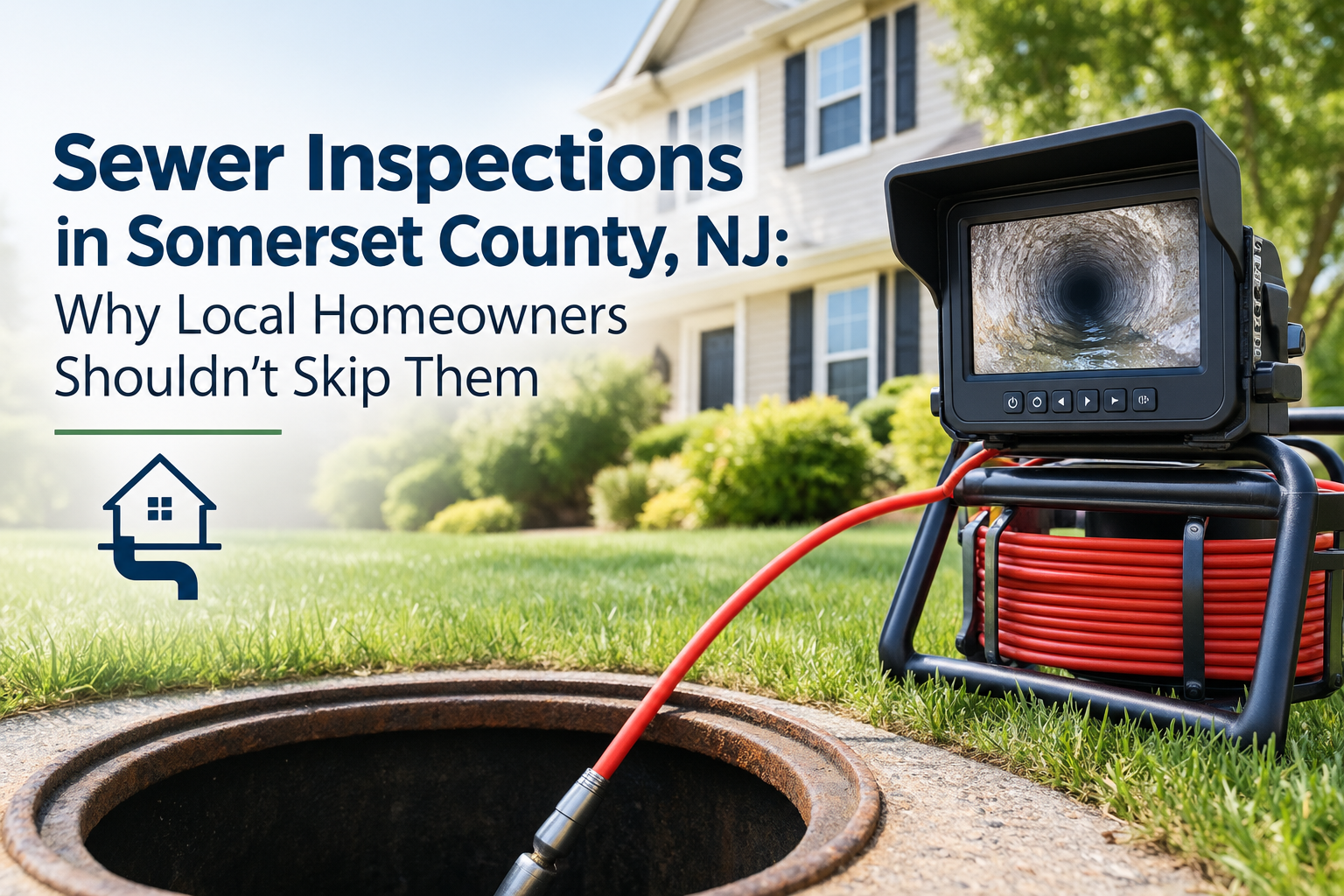
If your home was built before 1975 and you have never had your sewer line scoped with a camera, there’s a real chance you’re dealing with deterioration you can’t see from the surface. A sewer camera inspection is the only reliable way to know the true condition of the pipe running from your house to the street or septic system.
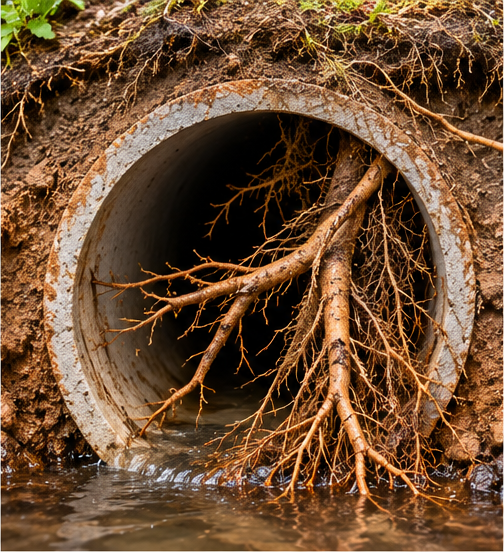
Somerset County is known for its tree canopy, and that’s part of the problem. Established neighborhoods with mature shade trees, particularly in the Somerset Hills communities of Bernardsville, Far Hills, and Peapack-Gladstone, sit on top of decades-old clay-tile laterals with joints that roots find easy to penetrate. Once roots get inside a pipe, they expand every year, slowly narrowing the flow until a homeowner is dealing with backups, slow drains, or a collapsed line.
Regular inspections catch root intrusion early, often before it becomes an emergency. And when roots are the culprit, hydro jetting can usually clear the line without the need to dig up your yard.
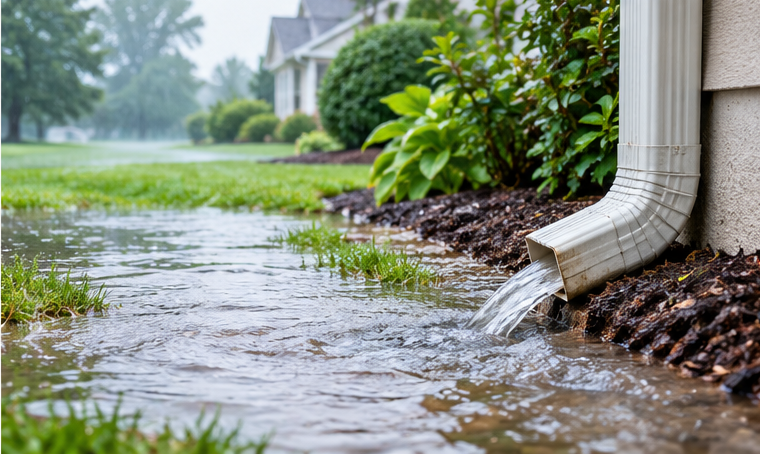
Somerset County’s location along the Raritan River and its tributaries adds another layer most homeowners in other parts of New Jersey don’t have to think about. Bound Brook and Manville have a long, well-documented flood history, including the record crest during Hurricane Floyd in 1999 and severe flooding again during Hurricanes Irene in 2011 and Ida in 2021. While the Green Brook Flood Control Project has reduced the frequency of major flooding since it was completed, homes in low-lying sections still face a higher risk of sewer surcharge, where rising water forces municipal systems to back up into private lines.
If your property sits near the Raritan, Middle Brook, or Green Brook, an annual or biannual inspection is worth treating as standard practice, not an optional extra. Catching a weak joint or a partially collapsed section before the next major storm can be the difference between a routine repair and a basement full of sewage.
Much of Somerset County sits on hard diabase bedrock, especially near Sourland Mountain, Rocky Hill, and the Watchung Ridges. That geology makes traditional dig-and-replace sewer repair slower, more disruptive, and more expensive than it would be in an area with softer soil. It also makes early detection even more valuable. A trenchless sewer repair approach, guided by a clear camera inspection, can often avoid the need for full excavation altogether, saving your landscaping and your budget.
Homes near Interstate 78, Interstate 287, or Routes 22, 202, and 206 experience more than just noise from passing traffic. The constant vibration transmitted through the ground gradually stresses pipe joints, especially on older lines that have already lost some flexibility. Over years, this can accelerate cracking that wouldn’t otherwise show up until it becomes a real problem.
A few signs tend to show up consistently before a sewer line fails completely:
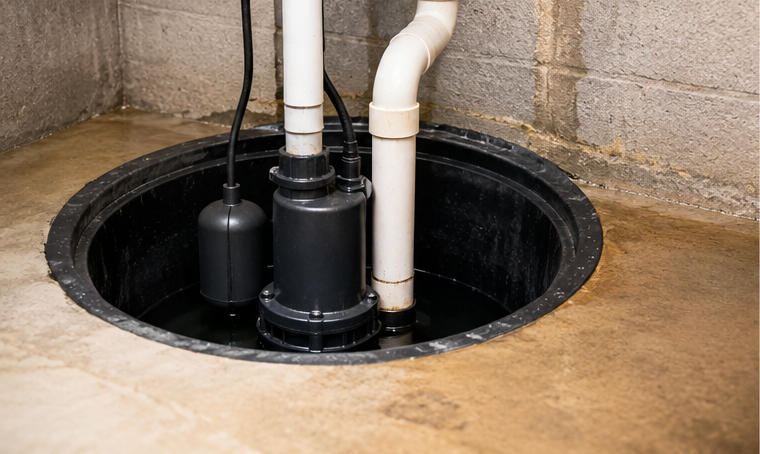
If any of these sound familiar, it’s worth scheduling a camera inspection before the problem gets worse. Combined with yard drainage improvements where needed, a proper inspection gives you a clear picture of what’s happening underground.
Between older clay and cast iron pipe in the river boroughs, aging mid-century lines in the suburbs, mature tree roots throughout the Somerset Hills, flood exposure along the Raritan, and the added complication of bedrock and traffic vibration, Somerset County gives homeowners more reasons than most to stay ahead of sewer problems rather than react to them.
A routine inspection is inexpensive compared to emergency excavation, and it gives you the information you need to plan repairs on your own timeline instead of during a crisis. If you haven’t had your sewer line inspected in the last few years, or if you’ve noticed any of the warning signs above, schedule an inspection with TruFlow and get a clear look at what’s really going on beneath your Somerset County property.
Back to Blog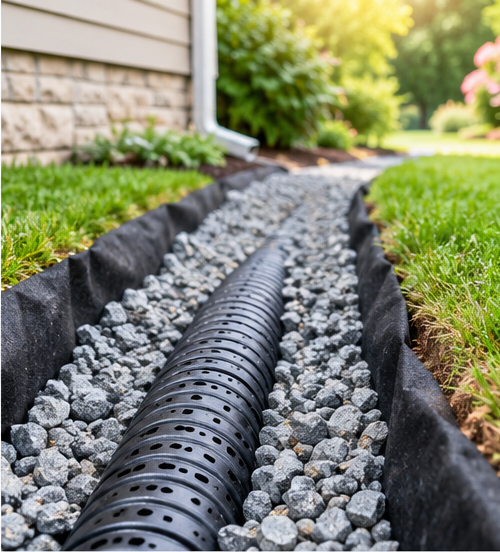

 hello@truflownj.com
 (908) 530-9516